2-Tonne Flatbed Carrier
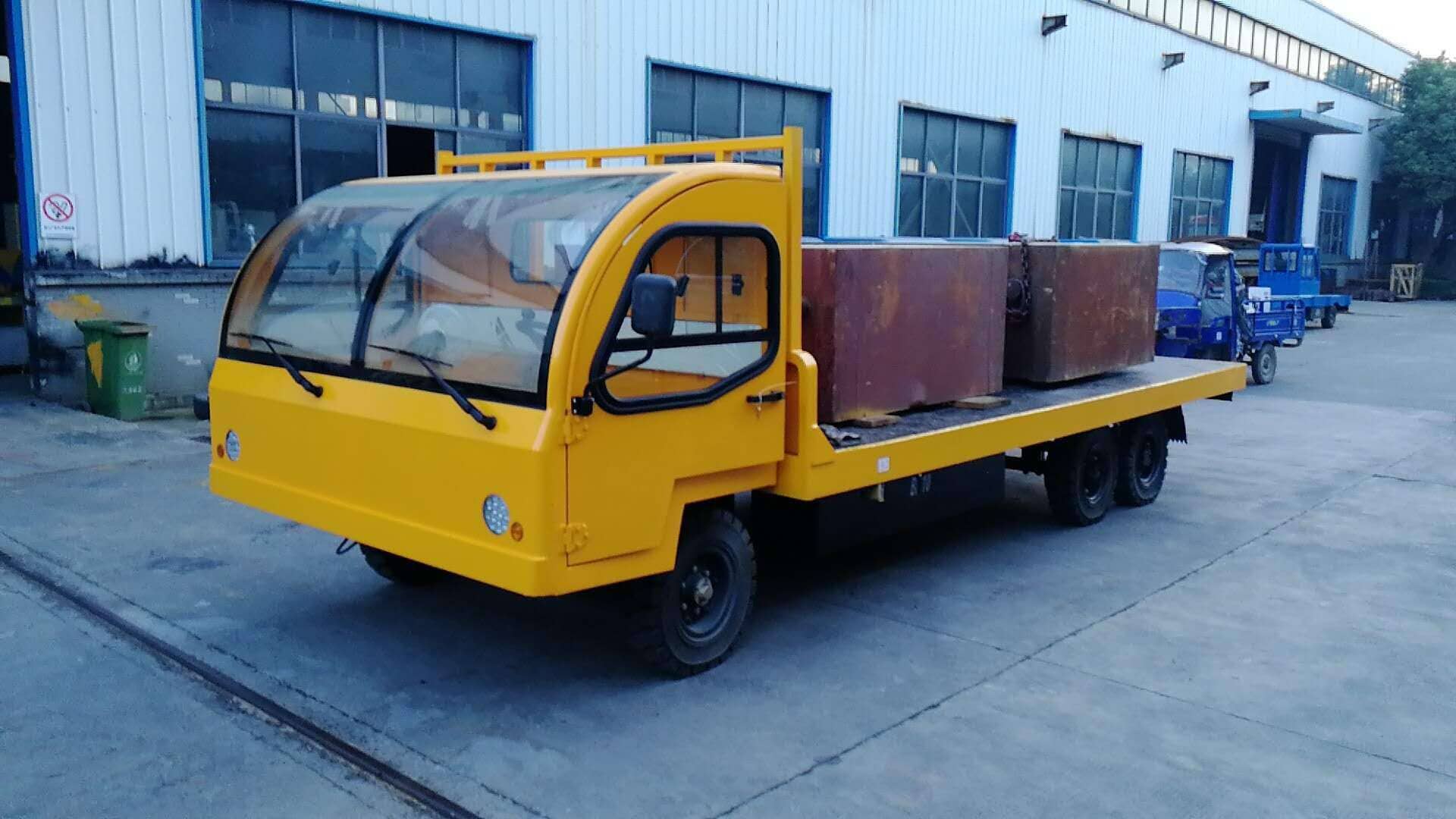
A two-tonne deck with a reinforced chassis for dense, heavy industrial loads.
View specifications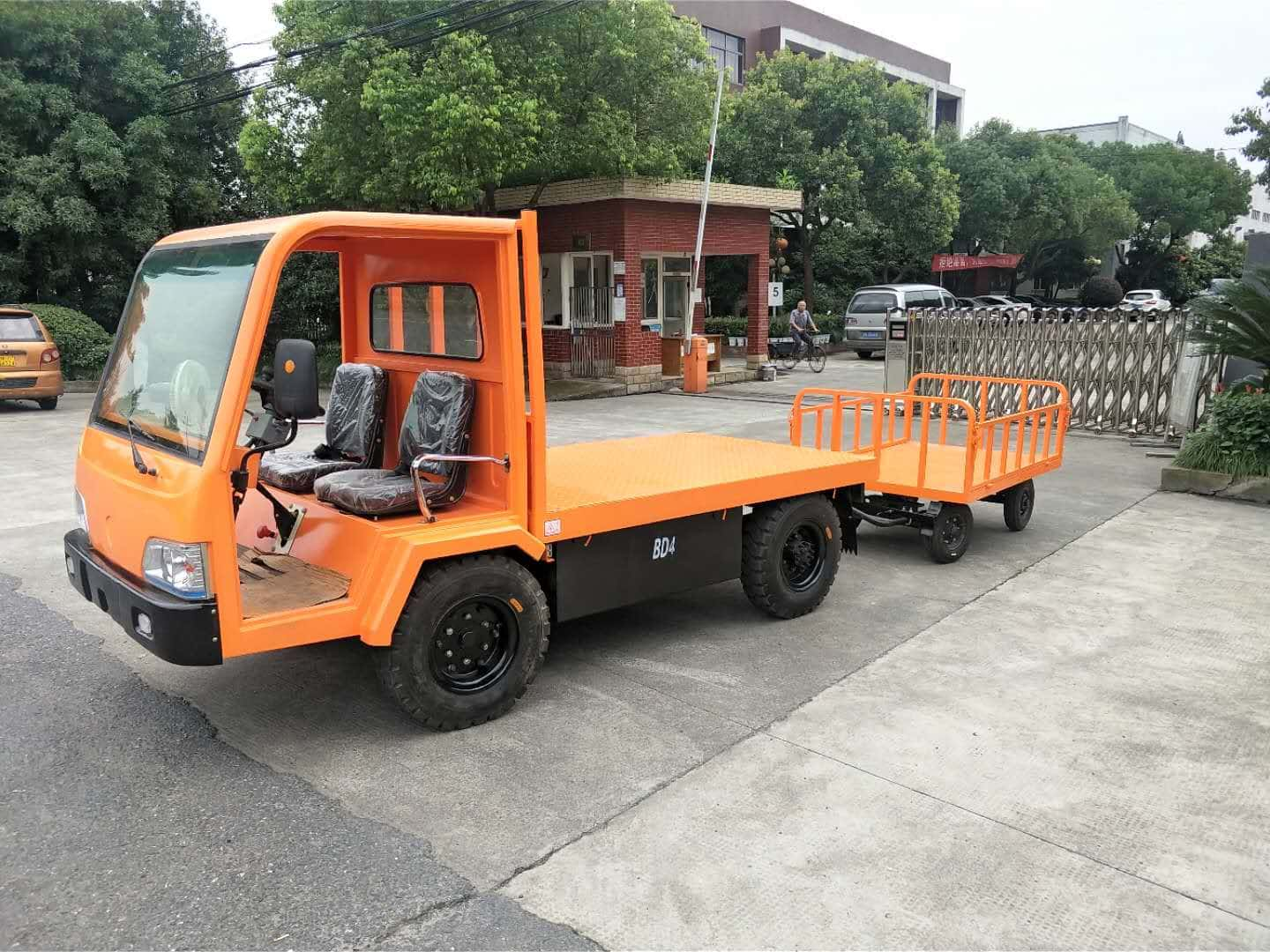
Industrial & Utility
A tug-and-trailer flatbed that moves two loaded trolleys in a single run.
Best suited to: Factories, warehouses, logistics yards. Manufactured to order in Suzhou; typical lead time 25–40 days depending on configuration.
Internal logistics is a numbers problem: every trip a flatbed makes without a load is a trip the factory pays for twice. The One-to-Two Flatbed Carrier answers it by towing two standard trolleys behind a single tractor unit, roughly doubling payload per driver hour.
It is designed around the trolleys most plants already own, so adoption needs no new racking, no new loading dock and no change to the material-handling flow.
The hitch is a hardened pin coupling with a 40 mm drawbar, rated to 1,500 kg of trailing load. A spring-loaded latch means a driver can couple up one-handed without kneeling, and a secondary safety chain is standard rather than optional.
The deck itself is a phenolic anti-slip board on a 100 × 50 mm steel subframe, bolted rather than welded so a damaged panel can be replaced in twenty minutes. The 480 mm deck height lets standard trolley castors roll straight on without a ramp.
A 4 kW drivetrain pulls a full two-trolley train at 18 km/h on level concrete, with gradeability of 12% when loaded. Range of 70–80 km reflects the stop-start nature of yard work, where the vehicle spends much of its time idling between loading points.
Regenerative braking matters more here than on a passenger vehicle: a loaded train stopping every ninety seconds recovers meaningful energy, and brake pad life extends to roughly three times that of a non-regenerative equivalent.
Warehouses use it to move pallet trolleys between receiving and pick faces; factories use it for line-side replenishment; ports and rail yards use it to reposition loaded trolleys without tying up a forklift and a certified operator.
| Model code | LTB-2T |
|---|---|
| Configuration | Tractor unit with twin-trolley pin hitch |
| Rated payload | 1,500 kg deck + 1,500 kg trailing |
| Powertrain | 48 V AC motor, 4 kW continuous / 7 kW peak |
| Battery | 8 × 6 V deep-cycle, 200 Ah |
| Range per charge | 70–80 km in yard duty |
| Top speed | 18 km/h (governed) |
| Gradeability | 12% fully loaded |
| Deck height / surface | 480 mm / phenolic anti-slip board |
| Deck dimensions | 1,800 × 1,200 mm |
| Brakes | Hydraulic with regenerative assist |
| Charging time | 6–7 hours on 220 V / 16 A |
Battery chemistry (lead-acid or lithium), charger voltage (110 V / 220 V / 380 V), body colour and graphics, seating layout, canopy or enclosure, and branding. Discuss your requirement with an engineer before the build sheet is fixed.
Ask an engineerRelated models
These models share components, chargers or service procedures with the one you are viewing.
A two-tonne deck with a reinforced chassis for dense, heavy industrial loads.
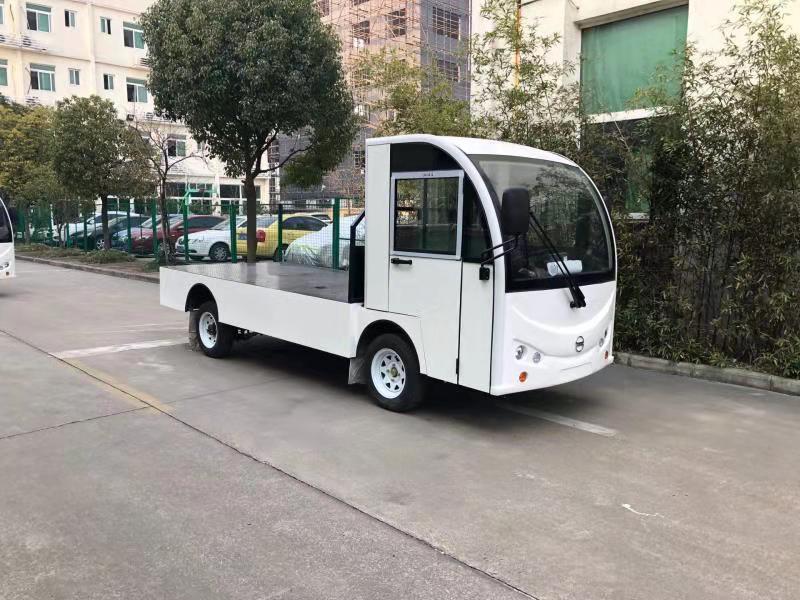
View specificationsHeavy-duty electric haulage for closed-site industrial routes where diesel is being phased out.
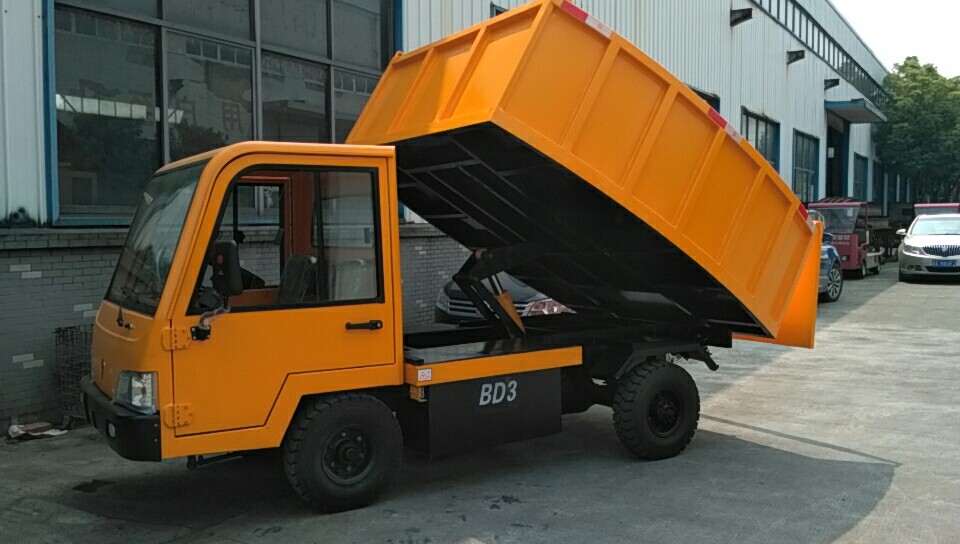
View specificationsHydraulic tipping body for granular loads, with a full-width tailgate and controlled discharge.
View specificationsSend your passenger count, terrain, daily distance and charging setup. Our engineers reply with a configuration, a realistic range figure and a delivered price — usually within one business day.